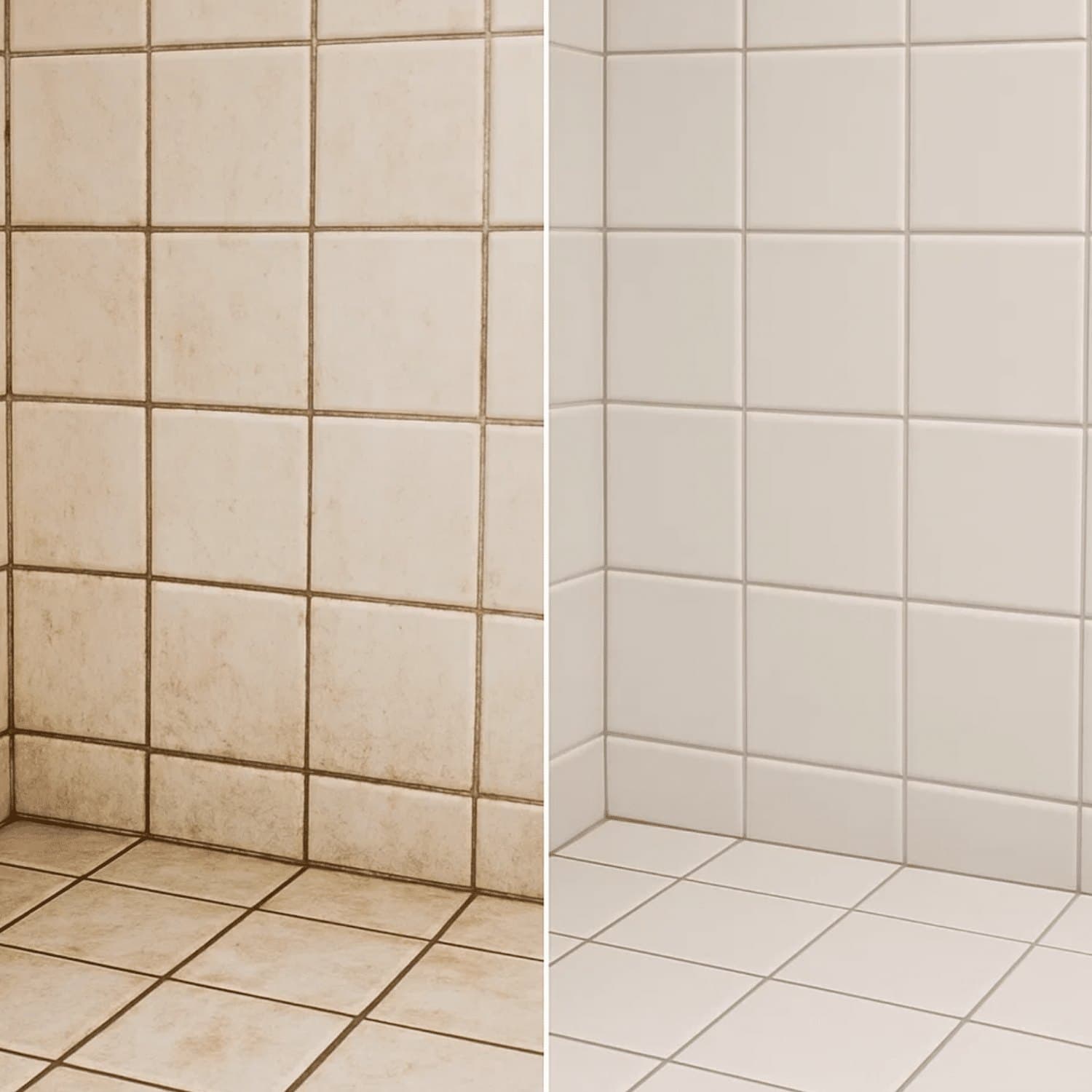
The moment you notice that dull, cloudy layer on your tile, getting rid of it becomes the goal. The floor might look clean but still feel tacky, show footprints, and look hazy in sunlight. Sometimes the grout lines even darken because the film holds onto dirt. Here in Franklin, we see this most in kitchens, entryways, and bathrooms, the spaces that get the most traffic and moisture.
Grout haze and film come from residue. Sometimes it's classic post-install grout haze left after a tile job. Sometimes it's everyday film from bathroom soap scum, greasy kitchen residue, or mop product that keeps layering on itself. Grout is porous, so it soaks up dirty water and cleaner film fast. The fix isn't more scrubbing, which can roughen grout and spread residue. The fix is to loosen the haze, lift it off, remove the dirty solution completely, rinse with controlled moisture, and dry quickly. Here's the full process.
Step 1: Identify the Haze Type
Wipe a tile with a clean damp white cloth. If chalky residue transfers, it's likely grout haze. If the cloth glides oddly and the tile feels sticky, it's cleaner or soap film. If nothing changes, you may be dealing with mineral or hard-water film. The right cleaner depends on which one you have.
Step 2: Confirm Your Tile Type
Ceramic and porcelain are forgiving. Natural stone like marble, limestone, travertine, or slate needs care because acidic products etch the surface. If you're not sure, treat it like stone and start gentle. Spot-test in a hidden corner, and skip abrasive pads on glossy tile.
Step 3: Dry-Remove Grit First
Loose dirt turns into muddy film once it gets wet, so vacuum or dust mop before anything else. Run a vacuum crevice tool along grout lines near baseboards and corners, where grit hides and gets dragged across the floor during mopping.
Step 4: Choose the Right Cleaner and Let It Dwell
Dwell time replaces hard scrubbing. Match the cleaner to the problem: a soap-scum cleaner for bathrooms, a grout-safe degreaser for kitchens, and a grout haze remover for post-install haze if your tile can handle it. Let it sit five to ten minutes in a small section. HGTV has solid guidance on how buildup forms and why technique matters. Don't let the cleaner dry on the tile, and don't overuse product, which just creates more residue.
Step 5: Agitate Lightly
Use a nylon brush on grout lines and a non-scratch or microfiber pad on the tile, working in smooth, steady passes. The goal is to lift the film, not grind it in. Skip wire brushes and abrasive pads that scratch tile and roughen grout.
Step 6: Lift the Dirty Solution Off
This is where most DIY jobs fail. After dwell time and agitation, the haze is floating in the cleaner on the surface. If you mop over it with dirty water, you smear it around and it dries back into a cloudy layer. Instead, wipe the section with a clean microfiber towel or flat mop pad, flipping or swapping often, until the tile feels less slick and looks clearer.
Step 7: Rinse With Controlled Moisture
Flood rinsing is a top reason haze comes back, because too much water pushes residue into grout pores and leaves minerals behind as it evaporates. Fill a spray bottle with clean warm water, lightly mist the section you just wiped, and wipe immediately with a fresh microfiber towel. Repeat once if it still feels slippery. If you use a bucket, keep the pad damp, not dripping, and change the water often.
Step 8: Dry the Floor Quickly
Drying is where clear tile happens. Leave the surface wet and residue can dry into streaks and haze, especially in our humidity. Dry the area with a towel or run a fan across the floor. If the tile looks clear when wet but cloudy after drying, there's still residue, so repeat a controlled rinse and dry before adding more cleaner.
Step 9: Reset Your Routine
A lot of haze is repeat buildup from mop products and "shine" cleaners that leave a coating. Use less cleaner than you think you need, avoid shine products, use microfiber pads and change them often, and rinse and dry occasionally in high-traffic zones. If the tile feels tacky after mopping, product film is building.
Step 10: Know When to Call a Pro
DIY works for light film. Professional help is the smarter move when the haze is heavy and widespread, the tile stays cloudy in sunlight, grout lines keep darkening, you suspect post-install haze, or your tile is natural stone you don't want to risk.
If the haze keeps returning, our tile and grout cleaning resets the surface and makes weekly upkeep easy. Call Safe-Dry of Franklin at 615-560-8384 or book online for a clearer floor that stays that way.